


In Jessica’s classroom, play isn’t just about passing the time—it’s about building a future.
Her project, Playing with Purpose, is a framework for early childhood education that redefines play as a structured, intentional, and joyful way to teach essential skills. From social-emotional growth to STEM readiness, Jessica believes that when children play with intention, they don’t just learn faster—they thrive.
Why Play Matters
The inspiration came from watching her own students—and even her own children—learn through joyful play. “When my daughter learned how to make applesauce at school, she wanted to come home and teach me,” Jessica recalls. “That’s when I realized—play with intention is powerful. It sticks.”
Research backs this up. Animals learn survival skills through play. Bears wrestle to practice defending themselves. Kittens stalk each other to sharpen hunting skills. For Jessica, the same principle applies to children: “Every playful moment is a chance to grow”.
The challenge? Too often, play in schools is either unstructured chaos or overly rigid. “The gap is, play loses its power if it’s just playing without purpose,” Jessica says. “Teachers need a framework to guide it. Parents need to see the learning happening. And children need to experience joy in the process”.
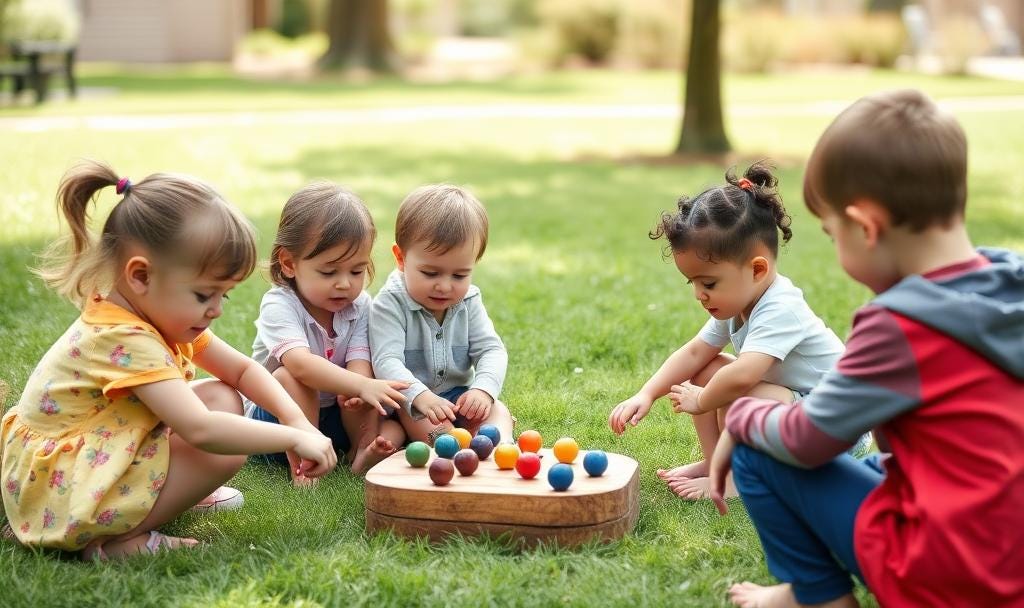
The Framework: Playing with Purpose
The solution is a curriculum model where every activity is intentional, designed with specific learning goals that align with state standards and accreditation requirements, while still preserving joy and spontaneity.
Play Grocery Store → Students count money, practice turn-taking, and solve math problems like “How many apples do I need for a pie?”
Building Blocks → Kids explore symmetry, engineering, and resilience as they test and rebuild towers.
Sensory Tables → Children discover cause and effect, practice sharing, and explore science by asking, “What happens when you pour water on the sand?”.
The key is teacher prompts. These simple, open-ended questions transform free play into deep learning, helping children connect their experiences to math, science, literacy, and practical life skills.
Benefits for Students, Teachers, and Parents
For Students: Holistic development—social-emotional growth, resilience, math, STEM, and practical life skills.
For Teachers: Easy-to-use tools that bring confidence and structure, while still keeping classrooms joyful.
For Parents: Clear connections between what children do at school and what they bring home—whether it’s wiping a table, cooking, or solving problems.
“Play becomes powerful when adults add intention,” Jessica explains. “Children will always learn through play—but with guidance, they learn how to problem solve, create, and lead.”
More Than Play
What makes Playing with Purpose different is that it’s not just about school—it’s about community. Parents are encouraged to bring play home, turning everyday activities into learning opportunities. Teachers can adapt the framework to meet local accreditation standards, while still preserving joy. And most importantly, children come away knowing that mistakes, resilience, and curiosity are part of the process.
“It’s not about sitting at a desk and doing worksheets,” Jessica says. “It’s about giving kids the tools to learn joyfully, with purpose, from the very beginning.”
Support Jessica’s amazing work - click here!
Join the Movement
Jessica’s project shows us that innovation in education doesn’t always come from new technology—it can come from rediscovering something as simple and human as play.
This is what Thinkering is all about—real people, bold projects, human stories. If you’re ready to bring your own dream project to life, join the Thinkering Fellowship today and be empowered to build what matters.


