


What happens when we stop pulling weeds—and start growing purpose?
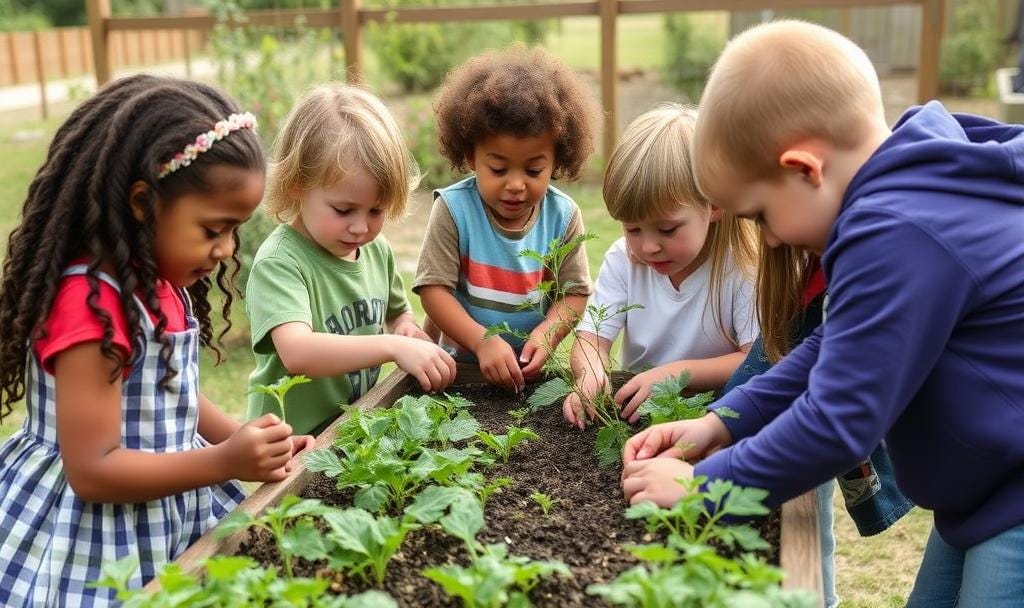
At Silver Creek Elementary, Thinkering Fellow Kim Rich is planting more than vegetables. She’s planting possibility. Her capstone project, Growing Solutions, is reimagining the school garden as a living, learning, culturally grounded space—one where students connect with their heritage, grow food with purpose, and become stewards of something larger than themselves.
This isn’t about beautifying a schoolyard. It’s about reclaiming land as a site of healing, learning, and leadership.
From Patchy Grass to Purposeful Growth
The garden at Silver Creek wasn’t new. But it was dormant. Overgrown. Forgotten.
Kim saw potential—not just in the soil, but in her students. She saw an opportunity to create something regenerative: a garden that grows food, yes—but also confidence, connection, and cultural legacy.
Through her capstone, she invited students into the full design process. They brainstormed, planned, and sketched. They researched compost systems and explored irrigation techniques. They studied Indigenous planting practices, integrated digital journaling, and even began designing signage in multiple languages. It was theirs from the beginning—and they owned every inch of it.
“The goal was never just to have a nice garden,” Kim shared. “The goal is for students to feel rooted, to see themselves as leaders, and to know they’re part of something that matters.”
What began as a physical space quickly became a catalyst for emotional and academic growth. The garden became a metaphor for what learning could be: hands-on, interconnected, and alive.
A Story Told Through Soil
Silver Creek is located near the Seneca Nation, and that proximity deeply informed Kim’s approach. The garden wouldn’t just be a place to grow food—it would be a place to grow stories. Cultural ones. Family ones. Personal ones.
Language teachers and elders were invited to contribute their knowledge. Students began thinking of ways to represent multiple cultures through signage, seeds, and shared practices. The garden, once a quiet corner of the campus, was now a storytelling space.
In Kim’s vision, this space honors Indigenous ecological knowledge while giving students the tools to explore their own identities through land, language, and stewardship.
Learning Beyond the Classroom Walls
The power of Kim’s project lies in how seamlessly it blends academic rigor with lived experience. Students apply math by measuring garden beds and budgeting for supplies. They explore scientific concepts through soil testing and composting. They write reflections, design public-facing materials, and engage in civic conversations about food justice and sustainability.
But even more importantly, they begin to see themselves as contributors to their community. They realize their actions have impact. They begin to lead.
In a time when student engagement is waning and connection is harder to foster, Growing Solutions is modeling what a truly integrated, experiential, and human-centered learning environment looks like.
Growing Forward
This project isn’t a one-time initiative. It’s a living, evolving framework that’s already influencing how Silver Creek thinks about sustainability and student leadership.
Kim is currently working with summer school programs to extend the garden’s reach year-round. She’s exploring hydroponics and indoor grow kits to connect science instruction with seasonal cycles. And she’s developing educator professional development to help others see how outdoor learning can deepen curriculum without sacrificing standards.
Local businesses are taking notice. Families are getting involved. And other schools are beginning to ask: How can we do something like this, too?
“This garden will give the students more than vegetables. It will give them a sense of place—and pride.”
Thinkering in Bloom
At Thinkering Collective, we believe education should feel alive. It should respond to the needs of students and the communities they call home. And when educators are empowered to create with courage, the results are nothing short of transformative.
Kim’s garden is more than a capstone. It’s a case study in what happens when students are invited to co-create their own learning environments—and when land, legacy, and leadership intersect.
Let’s keep growing.
🌱 Support the Growing Solutions Garden Fund
🤝 Partner With the Project
🔗 ThinkeringCollective.org
🌟 Ready to Build What School Could Be?
The Thinkering Fellowship is where bold ideas become real-world impact. If you're an educator with a vision—or the spark of one—join a growing network of change-makers reimagining learning from the inside out.


