At AMS 2026, amid the buzz of innovation and the hum of possibility, we sat down with Oliver from Storyline to explore a provocative question:
What happens when AI becomes the observer in the classroom?
The conversation quickly moved beyond technology and into something deeper, the evolving role of educators in a future shaped by intelligent systems.
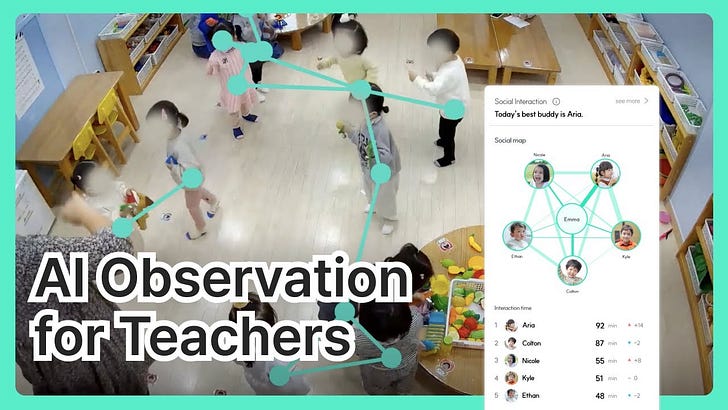
Storyline’s approach is bold. Using multiple cameras positioned in a classroom, their platform creates what they describe as an AI teaching assistant. The system tracks activity levels, social interactions, and patterns of engagement in real time, generating insights that traditionally required hours of observation and documentation. The goal is simple: free teachers to focus on what matters most, nurturing, guiding, and educating children.
Storyline features cameras that leverage movement to determine behavior trends and data insights.
This idea resonates strongly with human-centered learning. Observation has always been central to progressive educational philosophies, especially Montessori. Yet in modern classrooms, the demands of documentation, assessment, and compliance often pull educators away from meaningful interactions with students. Technology like this challenges us to reconsider where teacher energy should be spent.
Rather than replacing educators, AI in this context becomes an amplifier of human connection. By handling routine observation and data collection, teachers gain time to engage in deeper relationships, personalized guidance, and responsive instruction. As Oliver explained, the vision is not to automate teaching, but to automate the tasks that prevent teachers from fully teaching.
Of course, the conversation also surfaces tension. The idea of cameras and AI analysis in classrooms raises important questions about privacy, trust, and the human experience of learning. These concerns matter, and they should. But innovation often begins in discomfort. If the classroom of the future includes intelligent systems capable of surfacing patterns we cannot see alone, educators must help shape how those systems are used.

From a Thinkering perspective, this is where the conversation becomes powerful. The future-ready classroom isn’t about technology for technology’s sake. It’s about designing environments where tools expand agency, for both teachers and students. When AI handles observation, teachers can focus on mentorship, creativity, and cultivating curiosity. That shift aligns directly with the learner profile we believe is emerging: collaborative, empathetic, adaptive, and deeply human.
Perhaps the most compelling takeaway from the interview is this: technology doesn’t define the future of education, educators do. Tools like Storyline simply expand what’s possible. The real question is how we, as a learning community, choose to use them.
If AI can give teachers more time to connect, listen, and inspire, then the classroom of the future may not be less human, it may be more human than ever.
And that’s a future worth Thinkering toward.